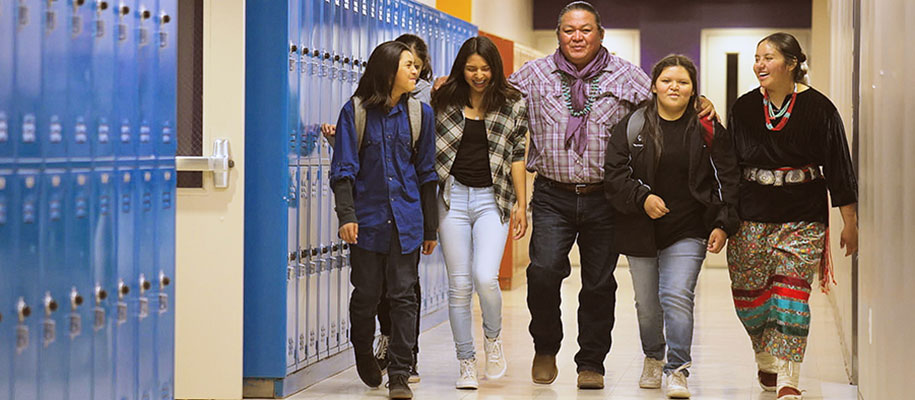
November is a time for giving thanks and gratitude as well as recognizing the history and celebrating the contributions of Native Americans. Native Americans have had an extraordinary impact on shaping our nation’s way of life and culture, from medicine and religion to art and agriculture and much more. They were our nation’s first people who built and cultivated cultural communities of their own. After 1492, European colonization of the Americas had a major impact on Native American culture and created immense conflict, forced slavery, appropriation of land, and disease infliction. This eventually led to the demise of Native cultural transitions, land, and communities.
Native American Heritage Month is a time to not only acknowledge the systemic injustices Indigenous populations have and continue to face in America but to work to actively rectify the harm done to these communities. As inhabitants of American land, we owe it to both ourselves and our Native and Indigenous communities to confront our country’s racist history and work to ensure we cultivate communities of civility, honor, and justice. With many schools, colleges, and universities offering programming and other resources, there are several ways students can celebrate and honor Native American Heritage Month on campus.
1. Learn about the land your campus inhabits
Many colleges and universities are working to confront and rectify their racist histories, from the renaming of college buildings to focusing on diversity and inclusion efforts that provide safe spaces for students, staff, and faculty of color to succeed and thrive. With this exploration of racist history, college students and staff need to acknowledge that much of the land their schools were built on was not originally their own land. This colonialization of campus land has led to difficult relationships between local campuses and tribal communities, which many colleges and universities are trying to mend. Schools like the College of Charleston have
You can . Just type in the campus address and discover which Indigenous people inherited the land. Native Americans have a deep reverence for nature—plants, animals, and humans—and their culture is deeply committed to honoring the land and all its contributions. —a Native international speaker, educator, and storyteller—says, “As you develop your awareness in nature, you begin to see how we influence all life and how all life influences us. A key and critical feature for us to know.” Knowing what land your college sits on provides you with information on which Indigenous communities to honor, acknowledge, and celebrate and which charities and communities to support. You could even work with your school’s foundation or alumni to establish a scholarship in honor of your local tribal community, which would critically help their access to financial aid opportunities.
Related: Read the stories of five incredible people in our Native American Heroes of History series
2. Learn about the injustices Native communities are facing
It is a regrettable fact that the colonization and violence inflicted on Native communities over the course of our nation’s history has robbed them of their land, natural resources, and cultures. This exploitation makes the rebuilding of sustainable communities even more challenging. Native Americans continue to face numerous contemporary injustices, from lower homeownership to increased health disparities and poverty levels; in fact, (one in four) among the lowest labor force rate (61.1%) of any major racial group in the United States. Most tribal members cope with food insecurity and associated health problems, unemployment rates as high as 85%, and major housing shortages. Meanwhile, violence impacting Native and Indigenous communities continues at endemic rates. Murder is the third-leading cause of death for Indigenous women, and in their lifetime. There’s often a tendency to view these injustices as things of the past, but there is still much suffering and trauma in Native communities. To learn more about issues impacting these communities, check out the resources below:
3. Study Indigenous art and culture
Native and Indigenous communities have a huge impact on culture and the arts—their works span a wide range of media, including storytelling, wood and stone carving, painting, beadwork, song, dance, and more. For many historically underrepresented communities, art and culture are often the only living artifacts and features of their history, as many were only able to use art to preserve their culture and pass on cultural traditions. Indigenous communities value connectedness with their past. They cultivate strong family bonds, oneness with nature, and the wisdom of elders. Many ; for example, is a Cherokee artist who’s known for incorporating elements into her paintings of landscapes that are distinctly Native American.
You could also consider starting a book club featuring Native authors and storytellers. A great place to start is with . If your school has an art show or museum on campus, advocate for the featuring of Indigenous art or sculptures during Native Heritage Month. If you’re taking a social sciences course, consider advocating for the inclusion of textbooks by Indigenous authors in your classroom.
Related: Learn about four more inspiring Native American Heroes of History
4. Donate to and buy from Native- and Indigenous-owned businesses
Given the barriers to financial security, donating to and purchasing from Native and Indigenous businesses is a great way to support your local community and help build sustainable lives. Consider sending out a list of Native-owned businesses and encouraging other students, staff, and faculty to purchase their products or donate. To celebrate Native American Heritage Month, you could plan a Native- and Indigenous-owned business fair. to get started, or even . Sharing a list of businesses on social media is another great way to promote visibility and encourage others to support Indigenous communities.
5. Advocate for investments in Native student resources
Native American students face a host of challenges to college entry and graduation due to lack of financial resources, being first-generation students, conflict between their tribal identity and college student identity, and the racism and exclusion present on many college campuses. Campus life plays an integral role in a student’s sense of belonging and success, but on many campuses, there’s often a lack of support services for Native students. Consider advocating to the administration for the following culturally sensitive resources:
- A Native counselor or therapist on campus who understands the mental, social, and emotional challenges Indigenous students face
- Funding a tribal liaison who can work to actively cultivate meaningful relationships with tribal communities and local colleges
- New student orientation or graduation for Native students focused on their cultural traditions
- Native student clubs and organizations
- Increased hiring of full-time Native faculty and staff
- Ethnic studies classes focused on Native people and an Indigenous Studies degree or certification
Changing your campus culture takes time, and while advocacy is important, your school may also be looking for staff, faculty, and students who can ensure these initiatives are implemented.
Related: Read our College Search Q&A With Partnership With Native Americans
There are endless possibilities to carry on the spirit of thanksgiving and gratitude during the month of November. Please ensure you do your part to pay tribute to and respect our Native and Indigenous communities. As inhabitants of Native land and soil and as stewards of our communities, it’s pivotal that we work to strengthen and cultivate a culture of justice for our Native and Indigenous populations.
Indigenous students can find ways to pay for college on 糖心Vlog. Check out these Native American Scholarships and 3 Steps for a Better Search!